



What to know
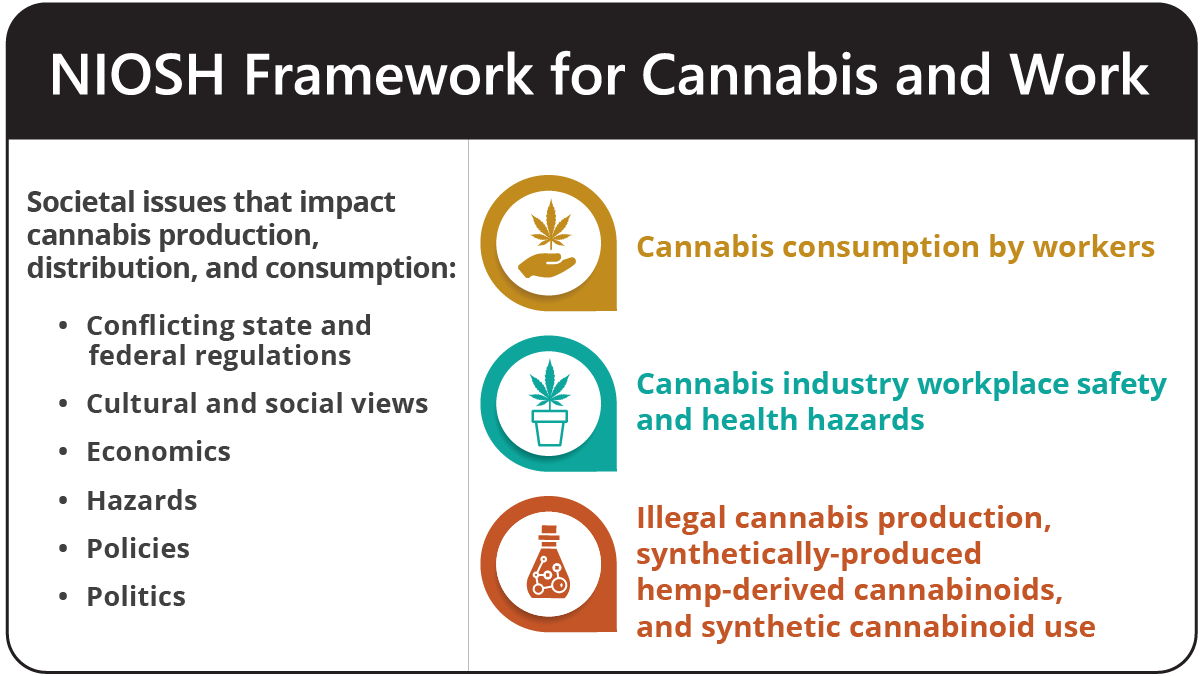
In light of rapidly changing laws and public attitudes, NIOSH has developed a framework for addressing workers' safety, health, and well-being related to cannabis. The framework focuses on guiding questions for future research.

Overview
Cannabis is a genus of flowering plants. It contains compounds called cannabinoids that can have a wide range of effects on the body and brain. Cannabinoids are products found in a cannabis plant (e.g., tetrahydrocannabinol [THC] and cannabidiol [CBD]).
Employers in all industries face challenges addressing issues of impairment among workers who consume cannabis. This is especially true for workers in safety-sensitive positions. As laws, regulations, and attitudes change related to consuming cannabis, workers' health, safety, and well-being must also be addressed. Recognizing these rapidly occurring changes, NIOSH seeks to:
- Better understand cannabis and work-related issues
- Provide advice on workplace policies, programs, and practices
At a glance: Framework
NIOSH has developed a framework for addressing workers' safety, health, and well-being related to cannabis, in light of rapidly changing laws and public attitudes, and includes guiding questions for future research. Learn more about these needs in Cannabis and work: need for more research.
Guiding questions
- What trends and patterns exist for cannabis use by workers?
- What are adverse health consequences of cannabis consumption among workers?
- What is the role of cannabis in:
- medical treatment for workers?
- treating work-related health conditions?
- managing chronic pain from an occupational injury?
- Does cannabis consumption impact occupational safety and performance?
- What evidence-based cannabis-related workplace policies exist, including for:
- drug-testing
- impairment detection
- reasonable accommodation of medical cannabis use
- What is the impact of workers' unintentional cannabis exposure, such as those exposed to second-hand cannabis smoke?
- What are the impacts of cannabis consumption or exposure on occupational driving?
- What is the extent and impact of use or exposures of workers to synthetically-produced hemp-derived cannabinoids or synthetic cannabinoids?
- Examples of synthetically-produced hemp-derived cannabinoids include Delta-8 THC or Delta-10.
- Synthetic cannabinoids are a class of laboratory made substances similar to chemicals found in the cannabis plant. Examples include 'Spice' or 'K2'.
Resources
General resources
Resources on driving
Partner resources
This page was last updated on this date. Updates may include minor edits, image changes, or other modifications to page content.
The information on this page was last reviewed by subject matter experts to ensure accuracy.