



At a glance
CDC laboratory scientists work 24/7 in more than 200 cutting-edge laboratories across the U.S. as a key line of defense against new and predicted health threats.
Overview
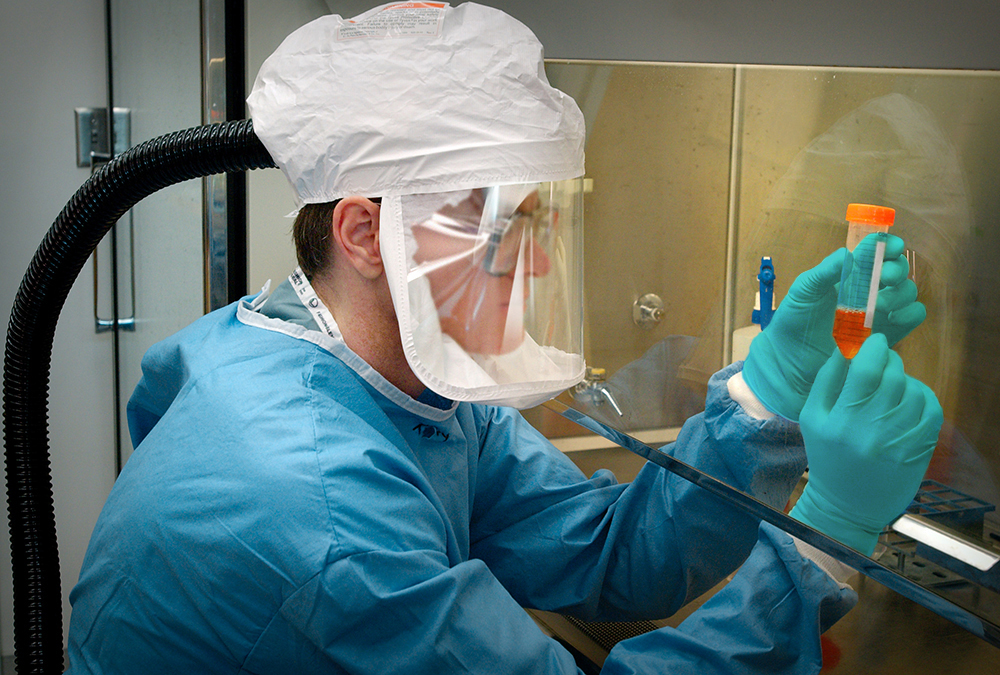
Scientists work on a range of critical work, including research, disease monitoring, and reference diagnostic testing that protect the American public. CDC scientists and other staff use the latest technology to:
- Investigate and fight disease spread and rapidly respond
- Detect threats due to the intentional misuse of harmful biological agents and infectious organisms and threats to oversight and data systems that protect against misuse of harmful biological agents
- Protect America’s blood supply
- Screen genetic and other health risk factors
- Identify environmental and workplace hazards
- Monitor the health of communities
CDC’s vital public health laboratories also:
- Maintain a vast reference library of pathogens that laboratories from around the world depend on to help identify dangerous microbes
- Deploy diagnostic tests and tools, such as advanced molecular detection technology that helps scientists detect health threats more quickly
- Invent new ways to rapidly test for infectious disease in the field
- Arm state, county, and local public health laboratories with the expertise and data they need to protect their citizens
Learn More About CDC’s Laboratories
National Center for Emerging and Zoonotic Infectious Diseases (NCEZID)
Laboratories of CDC’s National Center for Emerging and Zoonotic Infectious Diseases (NCEZID) provide national and global leadership in the identification, prevention, and control of emerging and zoonotic infectious diseases.
National Center for Immunization and Respiratory Diseases (NCIRD)
Laboratories at CDC’s National Center for Immunization and Respiratory Diseases (NCIRD) are global leaders in protecting the public against respiratory and vaccine-preventable disease.
Laboratories at CDC’s National Center for HIV/AIDS, Viral Hepatitis, Sexually Transmitted Disease, and Tuberculosis Prevention (NCHHSTP) provide vital scientific leadership to identify, develop, and evaluate effective interventions for the prevention of HIV/AIDS, viral hepatitis, sexually transmitted disease, and tuberculosis.
Laboratories at CDC’s Global Health Center (GHC) serve as worldwide reference laboratories for disease-monitoring, diagnosis, and drug resistance for HIV/AIDS and tuberculosis, parasitic diseases including malaria, and other infectious diseases.
National Center on Birth Defects and Developmental Disabilities (NCBDDD)
CDC’s laboratory within CDC’s National Center on Birth Defects and Developmental Disabilities (NCBDDD) monitors for select infectious agents and other abnormal factors among patients with bleeding disorders.
National Center for Environmental Health (Division of Laboratory Sciences) (NCEH/DLS)
Scientists in CDC’s Division of Laboratory Sciences (DLS) improve Americans’ health by developing laboratory methods to diagnose disease based on human exposure to environmental threats, testing for exposure to harmful chemicals and responding to public health emergencies.
National Institute for Occupational Safety and Health (NIOSH)
Laboratories at CDC’s National Institute for Occupational Safety and Health (NIOSH) protect America’s workers through cutting-edge laboratory science and safety efforts.
Learn about some of CDC’s laboratory successes over the years:
The SARS-CoV-2 Test Scale-Up in the USA
Enhancing the Yellow Fever Test
Developing & Deploying the Mcr-1 Rapid Detection Test
Controlling the Spread of Candida Auris
Expanding Detection & Tracking of Infectious Pathogens through Advanced Molecular Detection
This page was last updated on this date. Updates may include minor edits, image changes, or other modifications to page content.
The information on this page was last reviewed by subject matter experts to ensure accuracy.