



What to know

Estimated areas with histoplasmosis
These maps show the approximate range of where Histoplasma, the fungus that causes histoplasmosis lives in the environment.
Histoplasma is not evenly distributed within the shaded areas. It's also possible that Histoplasma could live outside of the shaded areas.
Darker shaded areas show where Histoplasma is more likely to live. Geographic boundaries, (represented with diagonal shading) are not strictly defined and may change over time.
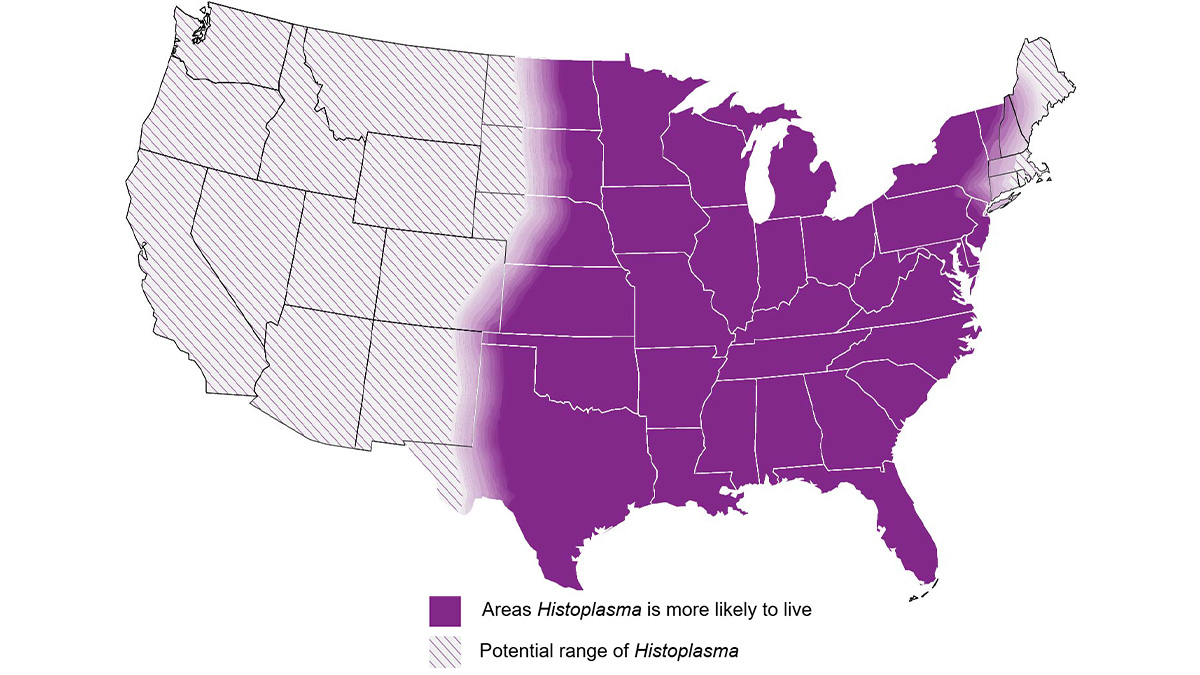
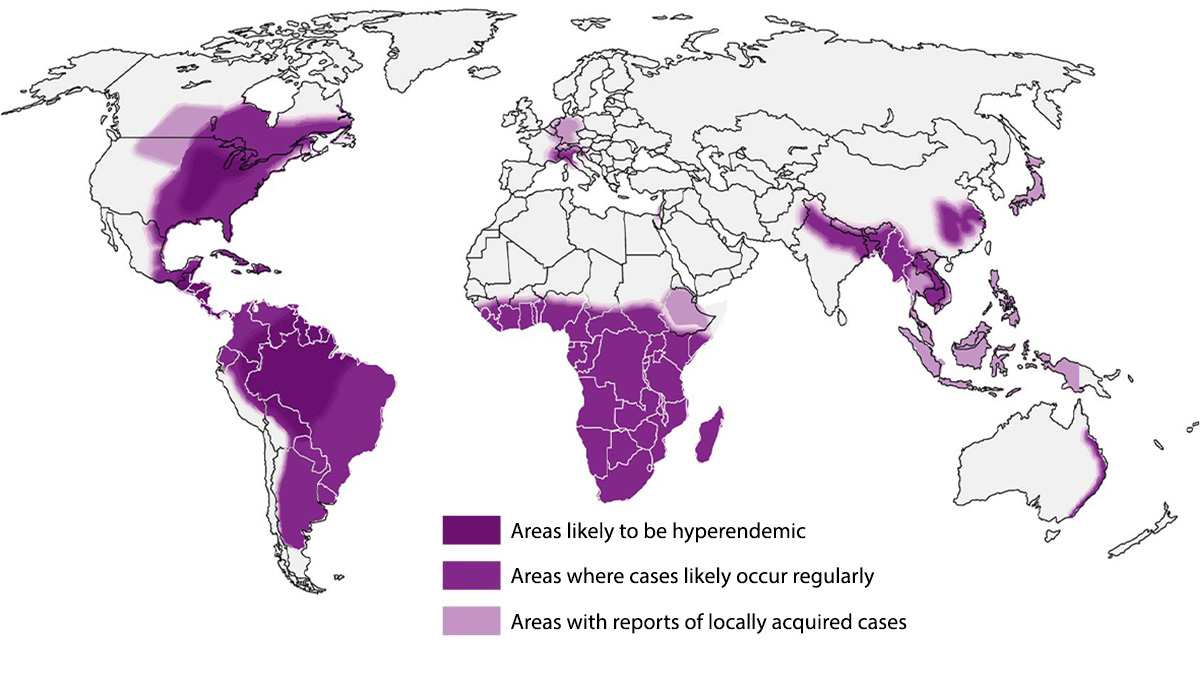
Areas likely suitable for Histoplasma to live
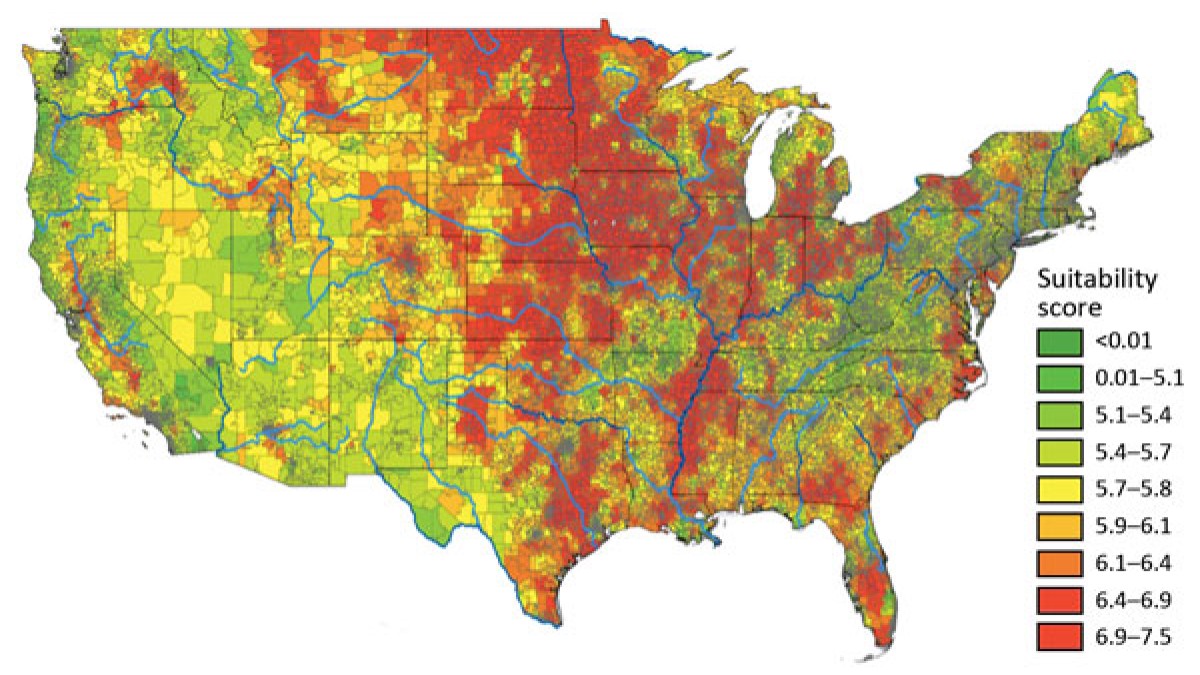
Scientists believe that the fungus Histoplasma grows best under certain environmental conditions. This map shows the results of statistical modeling that estimates where this fungus might be most likely to live. The model is based on land cover, soil acidity, and distance from water. On this map, higher suitability scores (in red) indicate areas that are likely to have better conditions for Histoplasma.
All statistical models make assumptions and have limitations. Environmental factors that are not included in this model can also affect where Histoplasma can live. More research is needed to better understand where Histoplasma most commonly lives.
This page was last updated on this date. Updates may include minor edits, image changes, or other modifications to page content.
The information on this page was last reviewed by subject matter experts to ensure accuracy.