



Key points
CDC funds health departments for practice-based research to prevent foodborne outbreaks in restaurants. Read partner successes in advancing evidence-based practices to prevent outbreaks in their communities.

Improving investigation and detection of foodborne outbreaks
Harris County (Texas) Public Health's improved website for reporting foodborne illness concerns contributed to a 30% increase in reporting and earlier detection of outbreaks. To increase detection of foodborne outbreaks, Harris County Public Health:
- Improved their reporting website to streamline the process the public used to report foodborne illness concerns to them.
- Made the website available in multiple languages.
- Evaluated their public communications and then developed a 'Protect Community' campaign to encourage the public to report foodborne illness concerns.
These actions contributed to a 30% increase in public complaints of foodborne illness to Harris County Public Health and a 200% increase in detection of outbreaks.
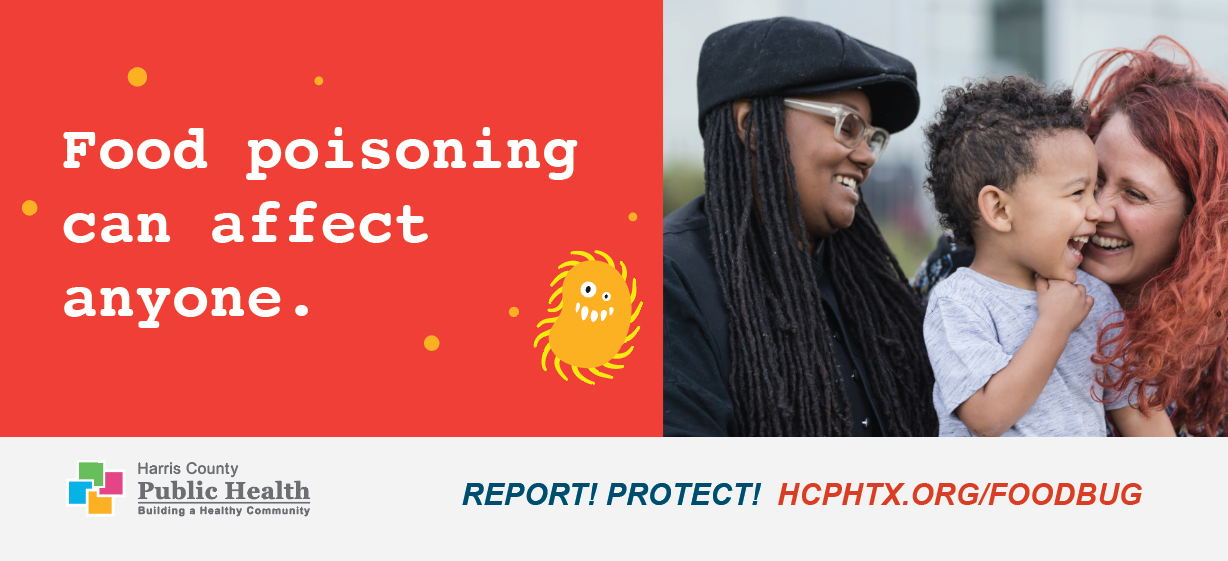
Image used with permission of Harris County Public Health.
The New York State Department of Health solved two long-lasting Listeria monocytogenes outbreaks with the help of environmental sampling. New York staff developed enhanced environmental sampling plans for the outbreak facilities and provided training and sampling materials to the investigators. Environmental sampling found Listeria in the facilities (e.g., deli meat slicer) that matched the clinical samples from people who were ill with listeriosis. Environmental sampling enabled investigators to recommend targeted interventions, such as replacing contaminated equipment and cleaning and sanitizing specific areas. The results of these investigations show the value of environmental sampling in investigating and stopping outbreaks.
The Tennessee Department of Health developed and added environmental sampling protocols for norovirus to their investigation toolbox. They first developed a sampling plan to detect norovirus in the environment during outbreaks. They then successfully found norovirus in the environment in 13 outbreaks (read an article about one of these outbreaks). Norovirus was found in a variety of places, including the underside of a table, juice dispenser buttons, and touch screens. Tennessee shared the locations with the outbreak facilities, which then responded with targeted and aggressive interventions. Because the project showed the value of environmental sampling outbreak investigation, Tennessee added environmental sampling to their outbreak investigative toolbox and developed an environmental sampling workshop in collaboration with CDC and the Association of Food and Drug Officials (AFDO).
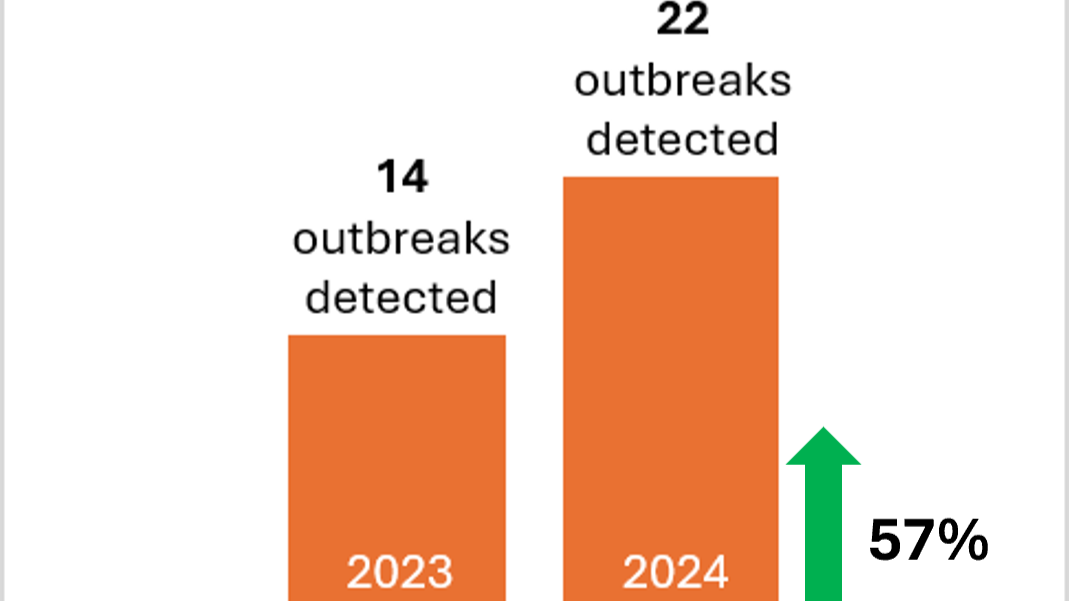
The Tennessee Department of Health's new online system for reporting foodborne illness concerns helped improve foodborne outbreak detection more than 50%. They launched an online system for the public to report foodborne illness concerns, replacing a telephone system. Through the new system, members of the public provide information about their complaint, including their symptoms, a 3-day food history, and the restaurant they believe caused their illness. From 2023 to 2024, the online system led to a 37% increase in complaints reported and a 57% increase in outbreaks detected through complaint investigations.
The Rhode Island Department of Health identified best practices for oyster outbreaks. Their investigation of the first Campylobacter jejuni outbreak linked to eating raw oysters in Rhode Island found that birds were the likely source of contamination. Based on their experience with this outbreak, they created best practices to help prevent Campylobacter jejuni outbreaks and guide investigations involving oysters. Key practices include:
- Asking ill people about exposure to raw shellfish during outbreak investigations.
- Educating shellfish aquaculture farms about the importance of keeping birds away from floating aquaculture gear to prevent oyster contamination.
- Creating guidance for closing and re-opening of oyster farms for harvesting during outbreak investigation and mitigation activities.
These findings can be used to prevent outbreaks and guide investigations.

Photo used with permission of the Rhode Island Department of Public Health.
The Rhode Island Department of Health's evaluation of foodborne illness complaint system showed that it played a key role in outbreak detection and prevention. The system identified most of the outbreaks investigated in the state and detected illnesses in a timely manner, likely contributing to prevention of further illnesses. These findings provide evidence of the vital role complaint systems play in detection and prevention of foodborne illness outbreaks.
Improving restaurant training, policy, and practice
The Minnesota Department of Health used findings from their research to train regulatory staff to address gaps in restaurant sushi preparation practices. Their research showed that sushi restaurants' most common food code violations were in the areas of parasite destruction and time as a temperature control. They developed a training on identifying and correcting these violations and delivered the training to state and local health department regulatory staff in Minnesota.
The New York City Department of Health and Mental Hygiene used cutting edge informatics tools to improve the efficiency of their restaurant permitting and inspection. They developed tools that
- Improve their restaurant contact data
- Identify restaurants with expired permits
- Display a digital map of inspection locations
They also trained inspection staff on how to use these digital inspection tools. Their work is helping the inspection program meet their inspection goals and improve inspector efficiency.
Southern Nevada Health District identified barriers to strong food safety culture in restaurants. They conducted focus groups on food safety culture with restaurant staff. Food safety culture refers to shared beliefs among restaurant staff that food safety is a priority. They found these common barriers:
- Reluctance to communicate with management
- Lack of equipment and materials
- Not enough staff
Staff said that the following things help promote a strong food safety culture:
- Ongoing, applied training
- Routine two-way communication with management
- Management oversight of food safety
- Manager appreciation for staff
These findings can inform restaurant managers' efforts to improve food safety.
Southern Nevada Health District tested a machine-learning model that uses anonymous web search and location data to identify restaurants with customers with foodborne illness symptom complaints. They found that restaurants identified by this model were more likely to have health code violations, suggesting an active lapse in food safety. The model could help health departments target their food safety resources to restaurants that need it most.
The Tennessee Department of Health used findings from a study on farmers' markets to strengthen food safety. To better understand risks associated with food sold at farmers' markets, they assessed food safety practices at 120 vendors in 32 farmers' markets. They found that
- More than 100 food items for sale were considered higher risk, as they required specific time and temperature conditions to prevent the growth of harmful bacteria (e.g., meat and dairy products).
- About 20% of these items were not kept in the required time and temperature conditions, increasing their foodborne illness risk.
As a result of these findings, market vendors who sell high-risk foods now receive a permit from and inspections by the Tennessee Department of Health to help ensure food safety.
Multisite studies
Research from EHS-Net multisite studies found the following:
- Restaurants with kitchen managers certified in food safety are less likely to have foodborne illness outbreaks, have better food safety practices, have better ratings and fewer critical violations on their inspections (read our summaries).
- Posting health department restaurant inspection scores at restaurants and using letter grades for restaurant inspection results are linked with fewer foodborne outbreaks and could lead to safer restaurants (read the summary).
- Managers can support workers staying home when sick by taking a proactive role in deciding whether sick workers should work (read the summary).
- Retail delis can address gaps in food safety practices by encouraging kitchen manager certification and having written slicer cleaning policies (read the summary).
Read more success stories on EHS-Net.
Federal partners
In 2016, the U.S. Department of Agriculture's Food Safety and Inspection Service (FSIS) released a new rule on records to be kept by official establishments and retail stores that grind raw beef products. The rule requires establishments to maintain beef grinding logs, which will improve FSIS's ability to trace the source of foodborne illness outbreaks. Findings from the CDC-funded beef grinding study were part of the scientific rationale behind the new rule.
This page was last updated on this date. Updates may include minor edits, image changes, or other modifications to page content.
The information on this page was last reviewed by subject matter experts to ensure accuracy.