



At a glance
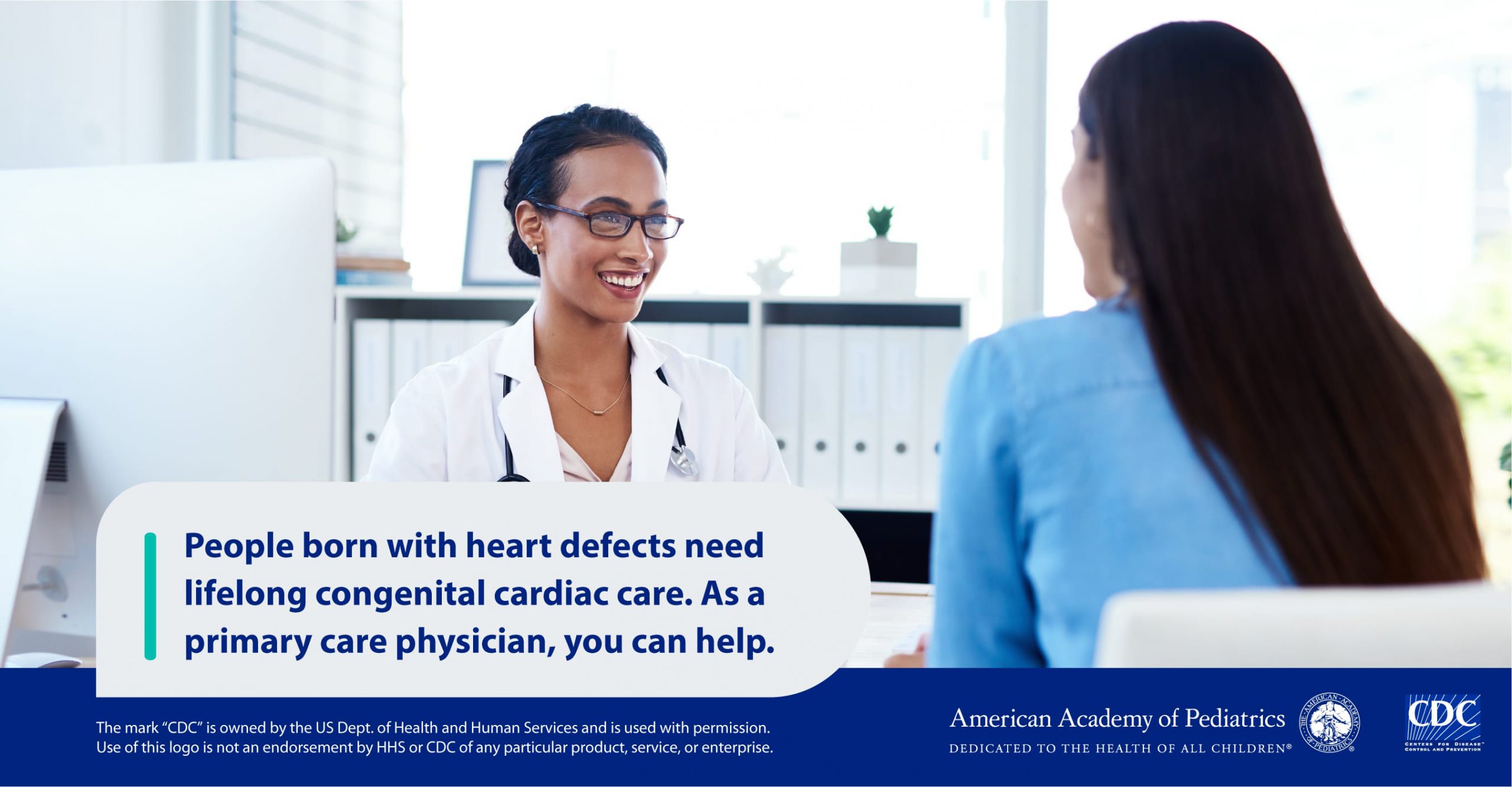
Congenital heart defects are lifelong conditions. Adults who were born with heart defects need to see a congenital cardiologist regularly to stay healthy, but many do not. As a primary care physician, you play an important role in connecting people with heart defects to the care they need.

Overview
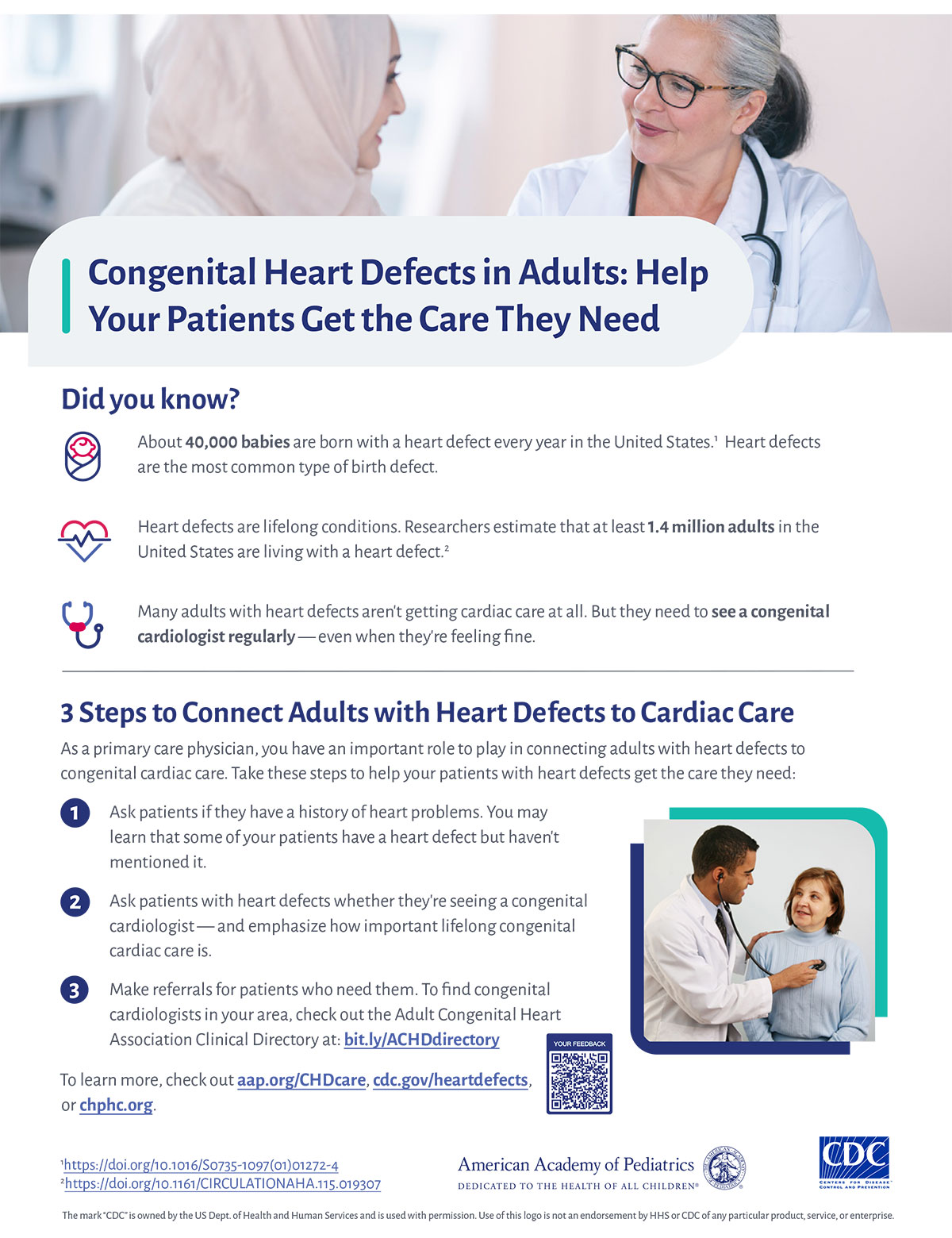
Take these steps to connect adults with congenital heart defects to congenital cardiac care:
- Ask patients if they have a history of heart problems; you might have patients with heart defects who've never mentioned they have one.
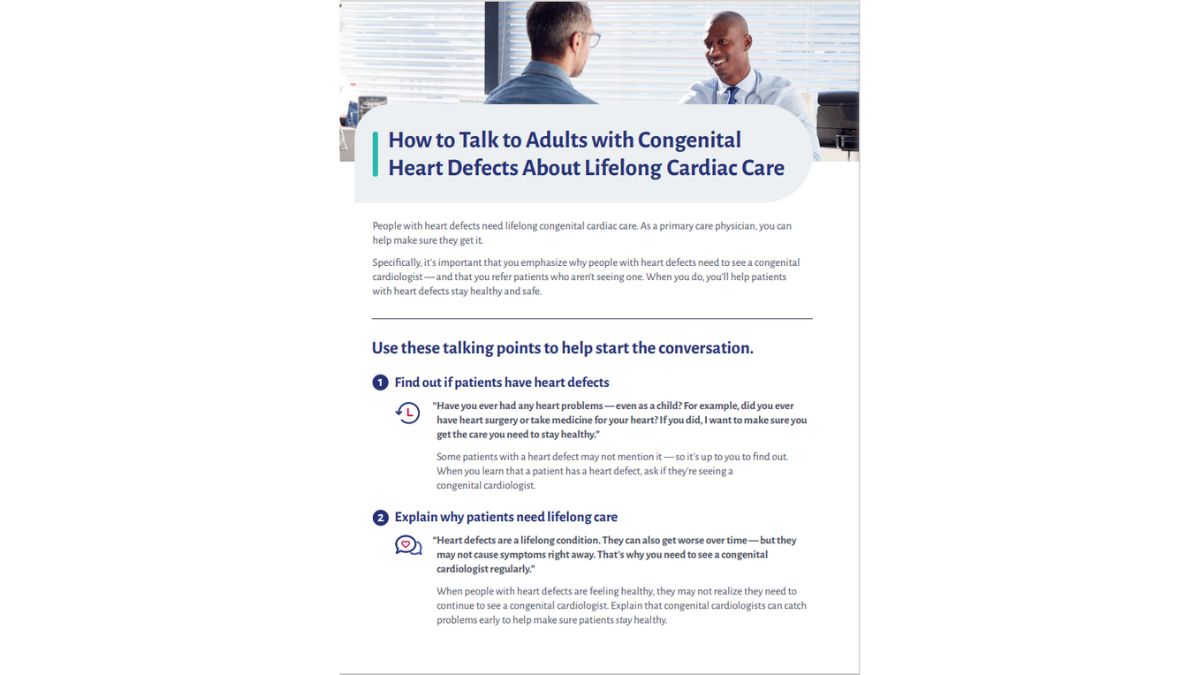
- Ask patients with heart defects if they're seeing a congenital cardiologist. If they're not, explain why lifelong congenital cardiac care is important.
- Talk to young patients with heart defects about transitioning from a pediatric cardiologist to an adult congenital cardiologist.
- Refer patients who aren't getting the care they need to a congenital cardiologist. If you need help finding congenital cardiologists in your area, check out the ACHD Clinic Directory.
Did you know?
About 1.4 million adults in the United States are living with a congenital heart defect.
Content Source
National Center on Birth Defects and Developmental Disabilities (NCBDDD)
About This Page
Published: May 15, 2024
Updated: October 14, 2026
This page was last updated on this date. Updates may include minor edits, image changes, or other modifications to page content.
Reviewed: October 14, 2026
The information on this page was last reviewed by subject matter experts to ensure accuracy.