



Key points
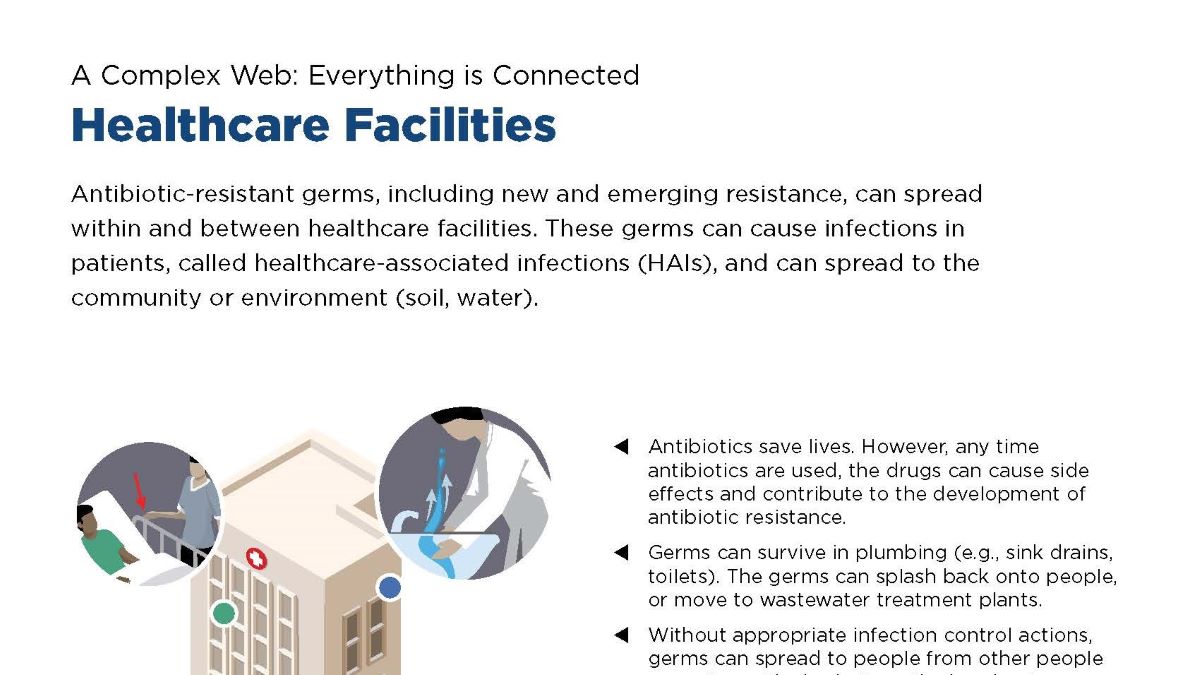
- Antimicrobial-resistant germs, including new and emerging resistance, can spread within and between healthcare facilities.
- People receiving medical care in healthcare facilities like hospitals or nursing homes can get serious infections called healthcare-associated infections (HAIs).
- Sometimes these infections can be caused by antimicrobial-resistant germs.
Overview
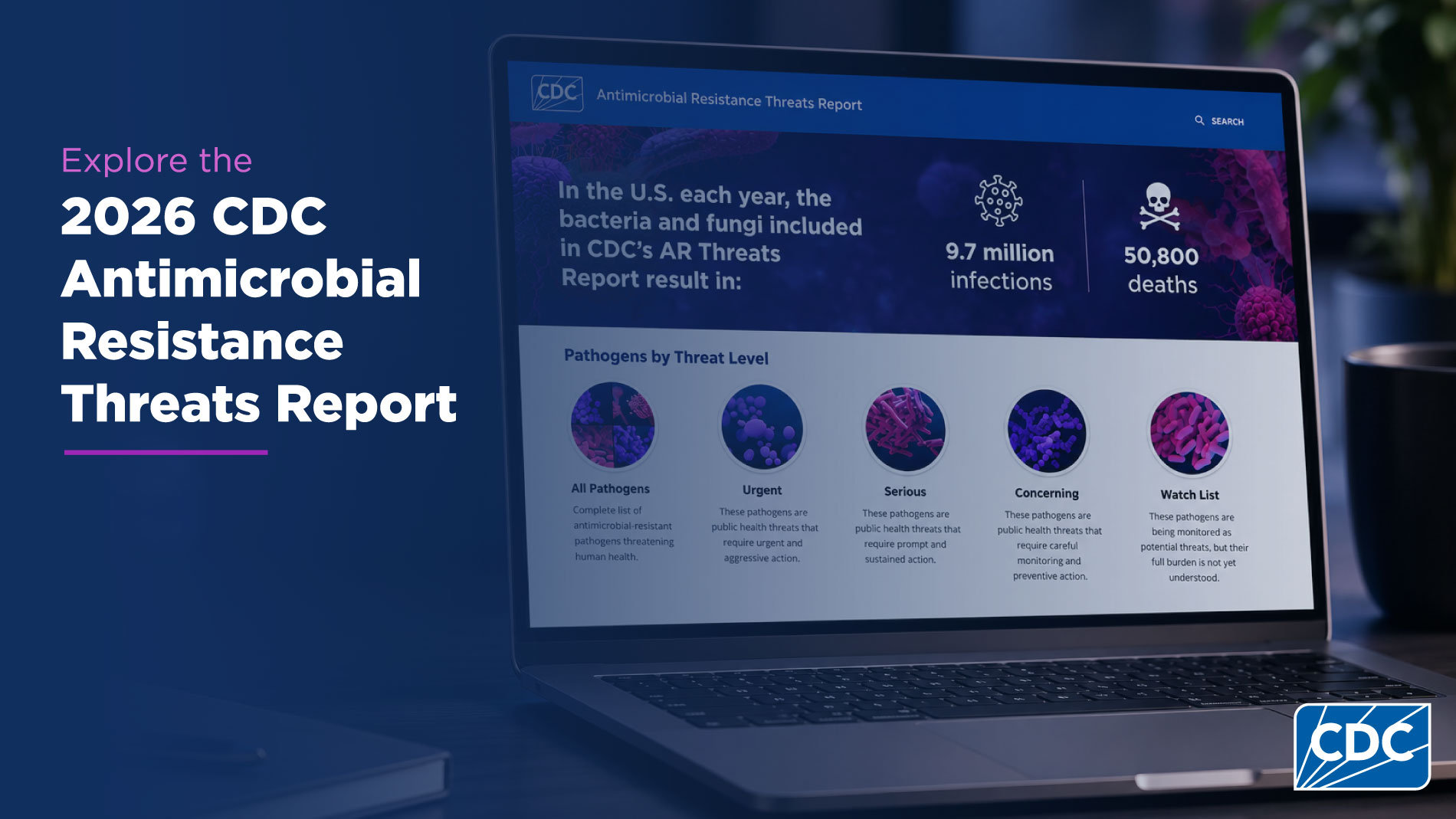
Some of the deadliest antimicrobial-resistant germs spread within and across healthcare facilities.
In fact, seven bacterial threats included in CDC's 2026 AR Threats Report that are commonly associated with health care caused more than 42,000 deaths in 2023 and resulted in nearly $12 billion dollars in healthcare costs.
Yet many HAIs are preventable. From 2012 to 2017, the number of antimicrobial-resistant infections seen in hospitals dropped 27% and the number of deaths from antimicrobial-resistant infections fell nearly 30%. Much of this progress was lost, in large part, due to the effects of the COVID-19 pandemic, which pushed healthcare facilities, health departments, and communities near their breaking points in 2020. CDC data show that six bacterial drug-resistant hospital-onset infections increased by a combined 20% during the COVID-19 pandemic compared to the pre-pandemic period, peaking in 2021 and remaining above pre-pandemic levels in 2022.
Three critical efforts to prevent HAIs and slow the spread of resistance include:
- Preventing infections related to surgery or placement of a catheter.
- Preventing the spread of germs through infection prevention and control.
- Improving the use of antibiotics and antifungals.
Learn more about HAIs and what you can do to be a safe patient.
How antimicrobial-resistant germs can spread in healthcare facilities
People receiving medical care in healthcare facilities like hospitals or nursing homes can get serious infections called HAIs. Sometimes these infections can be caused by antimicrobial-resistant germs.
These resistant germs can spread in the following ways:
- Without appropriate infection control actions, germs can spread to people from other people on surfaces like bedrails or the hands of healthcare workers.
- During procedures like surgery and the use of medical devices like catheters and ventilators that help treat patients. These instances can be pathways for germs to enter the body and cause infections.
- With patients when they are transferred from one healthcare facility to another or go home.
- Fecal waste (poop) can carry traces of previously consumed antibiotics, antifungals and antimicrobial-resistant germs. These germs can survive in plumbing (e.g., sink drains, toilets) and can splash back onto people or move to wastewater treatment plants.
- The presence of antimicrobial-resistant germs in human waste is especially challenging for wastewater from inpatient healthcare facilities like hospitals. Patients at healthcare facilities can shed some of the deadliest germs from resistant infections.
- Germs can cause infections in the community when healthcare settings do not stop their spread. When these resistant healthcare-associated germs spill over into communities, they become much harder to control.
How antibiotic and antifungal use impact AR
Antibiotics and antifungals are valuable tools. Patients should always be promptly treated when these drugs are needed for infections and to prevent sepsis. Effective antibiotics are also needed for people who are at high risk for developing infections, such as patients who have surgery and are at risk for surgical site infections.
However, any antibiotic and antifungals use—for people, animals, or plants—can cause side effects and contribute to antimicrobial resistance. One life-threatening side effect of taking antibiotics is severe diarrhea and colitis (inflammation of the colon) caused by C. diff. In 2017, CDC estimated 223,900 cases of C. diff infections requiring hospitalizations or in already hospitalized patients. At least 12,800 people died. C. diff can spread rapidly within healthcare facilities.
Antibiotic and antifungal use in the U.S.
- In the U.S., 5 out of 6 people are prescribed an antibiotic each year—at least 30% of this antibiotic use is unnecessary.
- In U.S. outpatient doctors' offices specifically, 1 out of every 3 antibiotic drugs prescribed is unnecessary. That's 47 million unnecessary prescriptions.
- Reactions from antibiotics cause 1 out of 5 medication-related visits to the emergency room (ER). In children, reactions from antibiotics are the most common cause of medication-related ER visits.
Antibiotic and antifungal use globally
- Global antibiotic consumption in humans increased by 65% between 2000 and 2015, whereas consumption in animals is expected to increase by 11.5% between 2017 and 2030. If nothing changes, antibiotic consumption is likely to increase worldwide by 200% between 2015 and 2030.1
- The use of antibiotics and antifungals are increasing, particularly in low- and middle-income countries as they become more accessible and affordable. Yet some parts of the world cannot access antibiotics and antifungals when they need them, putting patients at risk.
- While some vaccines are available, low vaccination coverage, coupled with poor water, sanitation, and hygiene infrastructure, leaves many people vulnerable to infection and dependent on antibiotics for treatment.
Improving antibiotic and antifungal prescribing and use is critical to treat infections effectively, protect patients from harms, and combat antimicrobial resistance. Learn more about antibiotic stewardship in healthcare facilities.
This page was last updated on this date. Updates may include minor edits, image changes, or other modifications to page content.
The information on this page was last reviewed by subject matter experts to ensure accuracy.
- Aditi Sriram, Erta Kalanxhi, Geetanjali Kapoor, Jessica Craig, Ruchita Balasubramanian, Sehr Brar, Nicola Criscuolo, Alisa Hamilton, Eili Klein, Katie Tseng, Thomas Van Boeckel, Ramanan Laxminarayan. 2021. State of the world's antibiotics 2021: A global analysis of antimicrobial resistance and its drivers. Center for Disease Dynamics, Economics & Policy, Washington DC.
- CDC. COVID-19: U.S. Impact on Antimicrobial Resistance, Special Report 2022. Atlanta, GA: U.S. Department of Health and Human Services, CDC; 2022.