



Key points
- Centers for Disease Control and Prevention's Learn the Signs. Act Early. has FREE research-based, family-friendly resources on child development.
- Use these resources to enhance professional development and family engagement in your program.

Professional Development
CDC's Learn the Signs. Act Early Free Resources:
- Help TTA providers, coaches, and consultants support a wide range of early childhood providers.
- Increase knowledge about early childhood development and provide practical tips to engage families with young children.
- Provide continuing education units (CEU) with FREE Watch Me! Celebrating Milestones and Sharing Concerns training to help providers meet professional development requirements.
- Aid in early identification of the 1 in 5 children with a developmental delay or disability1.
Family Engagement
CDC's Learn the Signs. Act Early. Free Resources:
- Supply information and resources on developmental monitoring to help providers engage and support families.
- Help providers communicate with families about child development.
- Encourage families to celebrate their child's development and act early on developmental concerns.
You can ensure children with developmental delays and disabilities receive the help they need.
- Encourage all providers and those who support them to take CDC's FREE 1-hour online CEU course, Watch Me! Celebrating Milestones and Sharing Concerns (www.cdc.gov/WatchMeTraining).
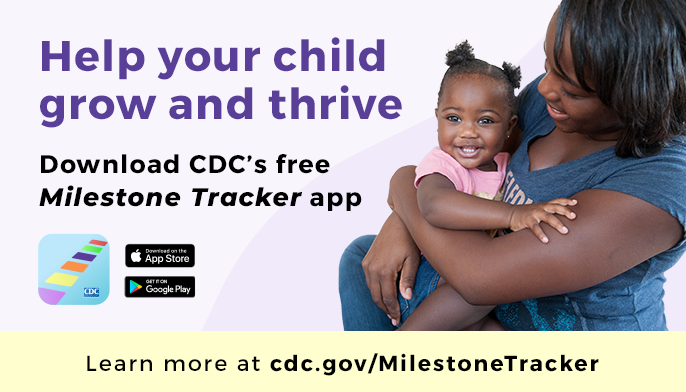
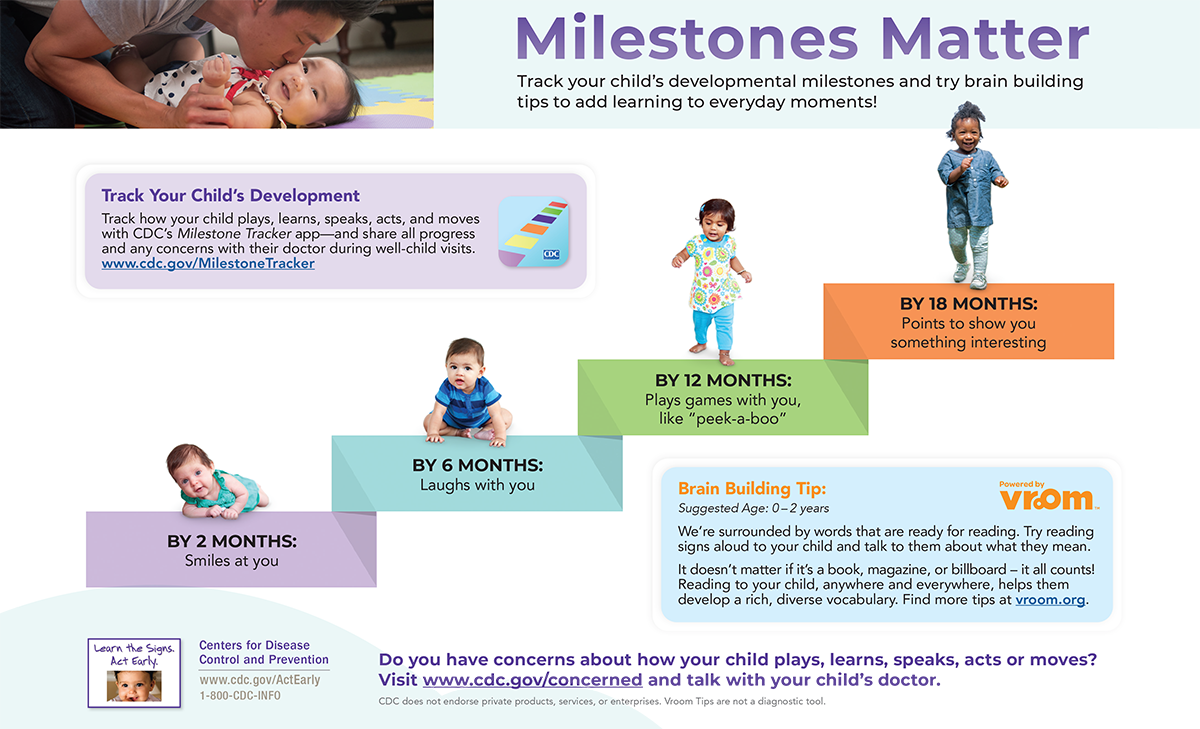
- Encourage programs to use milestone checklists in print, online, or with CDC's Milestone Tracker app to:
- Increase providers' practice of ongoing developmental monitoring.
- Complement developmental screening by engaging families in monitoring milestones.
- Increase providers' knowledge of potential signs of developmental delay and how to address concerns.
- Support early childhood programs and providers by sharing CDC's Tips for Talking with Parents and Developmental Monitoring: Getting the Conversation Started tip sheets for families.
Find the FREE resources mentioned here, as well as others.
Content Source
National Center on Birth Defects and Developmental Disabilities (NCBDDD)
About This Page
Published: September 4, 2025
Updated: December 30, 2024
This page was last updated on this date. Updates may include minor edits, image changes, or other modifications to page content.
Reviewed: December 30, 2024
The information on this page was last reviewed by subject matter experts to ensure accuracy.
- Zablotsky B, Black LI, Ng AE, Blumberg SJ. Trends in Parent-Reported Developmental Disabilities: 2019-2024. Pediatrics. Published online September 22, 2026.